
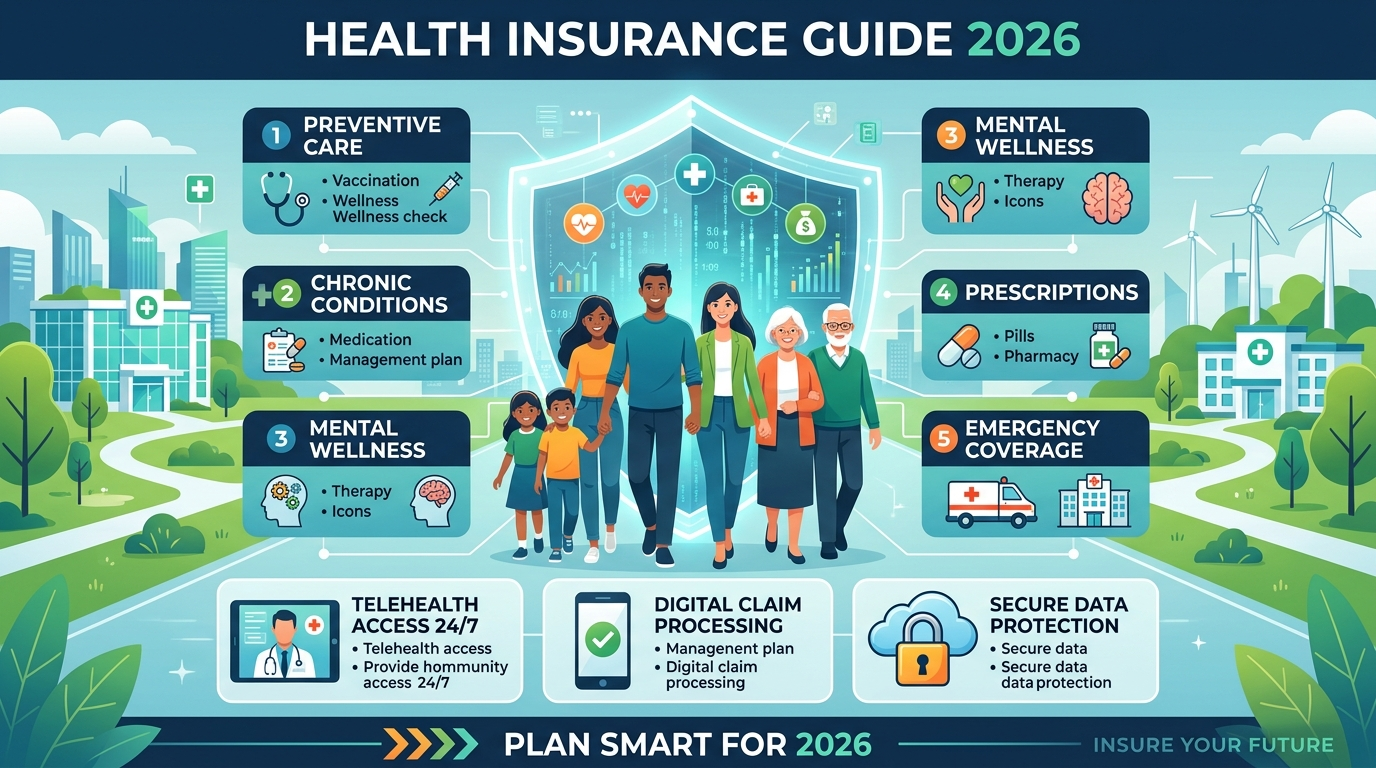
Health Insurance Guide 2026: Benefits, Coverage, Claims & Best Plans
Introduction to Health Insurance
Health Insurance has become an essential financial tool for individuals and families in today’s world. Rising healthcare costs, increasing medical inflation, and unexpected medical emergencies can place a significant burden on personal finances. A comprehensive Health Insurance policy helps cover hospitalization expenses, surgeries, diagnostic tests, medications, and other healthcare costs.
Whether you are a young professional, a family with children, or a senior citizen, investing in Health Insurance ensures access to quality medical treatment without worrying about large medical bills. In this guide, we will explore everything you need to know about Health Insurance, including its benefits, coverage, claim process, and how to choose the best policy.
What Is Health Insurance?
Health Insurance is a contract between an individual and an insurance company. Under this agreement, the insurer agrees to cover specified medical expenses in exchange for a premium paid by the policyholder.
A Health Insurance policy may cover:
- Hospitalization expenses
- Surgery costs
- ICU charges
- Diagnostic tests
- Doctor consultations
- Emergency treatments
- Daycare procedures
- Ambulance expenses
- Critical illness treatments
The primary purpose of Health Insurance is to provide financial security during medical emergencies and reduce out-of-pocket healthcare expenses.
Why Health Insurance Is Important
Medical expenses are increasing every year due to advancements in healthcare technology and specialized treatments. Without Health Insurance, even a short hospital stay can result in substantial expenses.
Some key reasons why Health Insurance is important include:
Financial Protection
Health Insurance protects your savings by covering medical costs that could otherwise create financial hardship.
Access to Quality Healthcare
With Health Insurance, policyholders can access better hospitals, experienced doctors, and advanced medical treatments.
Cashless Hospitalization
Most Health Insurance providers offer cashless treatment facilities at network hospitals, reducing the need for immediate cash payments.
Peace of Mind
Knowing that your medical expenses are covered allows you and your family to focus on recovery rather than financial concerns.
Major Benefits of Health Insurance
1. Hospitalization Coverage
Health Insurance covers expenses related to hospital stays, including room rent, nursing charges, and treatment costs.
2. Pre and Post-Hospitalization Expenses
Many Health Insurance policies cover medical expenses incurred before and after hospitalization, such as diagnostic tests and follow-up consultations.
3. Daycare Treatments
Modern Health Insurance plans often cover daycare procedures that do not require 24-hour hospitalization.
4. Critical Illness Coverage
Certain Health Insurance plans provide coverage for severe illnesses such as cancer, heart disease, stroke, and kidney failure.
5. Tax Benefits
Premiums paid for Health Insurance may qualify for tax deductions under applicable tax regulations.
6. Family Protection
Family floater Health Insurance plans provide coverage for multiple family members under a single policy.
Types of Health Insurance Plans
Individual Health Insurance
This type of Health Insurance provides coverage for a single individual.
Family Floater Health Insurance
Family floater Health Insurance covers spouses, children, and dependent parents under one policy.
Senior Citizen Health Insurance
These plans are designed specifically for individuals aged 60 years and above.
Critical Illness Health Insurance
This Health Insurance plan offers financial assistance when diagnosed with specified critical illnesses.
Group Health Insurance
Employers often provide Group Health Insurance as part of employee benefit programs.
Health Insurance Coverage
A standard Health Insurance policy may include:
- Hospital room charges
- ICU expenses
- Surgical procedures
- Medical practitioner fees
- Diagnostic tests
- Prescription medications
- Emergency ambulance services
- Organ donor expenses
- Daycare procedures
- Preventive healthcare services
Coverage may vary depending on the insurer and policy selected.
Common Exclusions in Health Insurance
Before purchasing Health Insurance, it is important to understand policy exclusions.
Common exclusions include:
- Cosmetic procedures
- Self-inflicted injuries
- Substance abuse treatment
- Experimental treatments
- Non-medical expenses
- Certain pre-existing diseases during waiting periods
Always read the policy document carefully before purchasing Health Insurance.
How to Choose the Best Health Insurance Policy
Assess Your Requirements
Evaluate your family’s healthcare needs before selecting Health Insurance coverage.
Compare Policies
Compare Health Insurance plans based on coverage, premium costs, and additional benefits.
Check Network Hospitals
Choose a Health Insurance provider with an extensive network of hospitals.
Review Claim Settlement Ratio
A higher claim settlement ratio indicates reliable claim processing.
Understand Waiting Periods
Review waiting periods associated with pre-existing illnesses and specialized treatments.
Health Insurance Claim Process
Cashless Claims
- Visit a network hospital.
- Present your Health Insurance card.
- Complete the required documentation.
- The hospital coordinates with the insurer.
- Approved expenses are settled directly.
Reimbursement Claims
- Pay hospital expenses initially.
- Collect all bills and reports.
- Submit documents to your Health Insurance provider.
- The insurer verifies the claim.
- Approved expenses are reimbursed.
Common Mistakes to Avoid When Buying Health Insurance
- Choosing the cheapest policy without comparing benefits.
- Ignoring policy exclusions.
- Delaying the purchase of Health Insurance.
- Selecting inadequate coverage.
- Not disclosing medical history accurately.
- Failing to review policy renewal terms.
Future Trends in Health Insurance
The Health Insurance industry is rapidly evolving with technology-driven innovations.
Emerging trends include:
- Digital policy management
- Telemedicine coverage
- Wellness rewards programs
- Personalized Health Insurance plans
- AI-powered claim processing
- Faster online claim approvals
These developments are making Health Insurance more accessible and customer-friendly.
Why Every Family Needs Health Insurance
Every family faces the risk of unexpected illnesses and medical emergencies. Health Insurance ensures that quality healthcare remains accessible without exhausting savings or creating financial stress.
A well-planned Health Insurance policy protects your loved ones, safeguards your finances, and provides peace of mind during difficult times. It is one of the most important investments for long-term financial security.
Conclusion
Health Insurance is no longer a luxury; it is a necessity. Rising healthcare expenses and increasing health risks make comprehensive Health Insurance coverage essential for individuals and families.
By selecting the right Health Insurance policy, you can protect your finances, access quality healthcare, and ensure long-term security for yourself and your loved ones. Start comparing Health Insurance plans today and choose coverage that matches your healthcare needs and financial goals.
Leave a Reply