
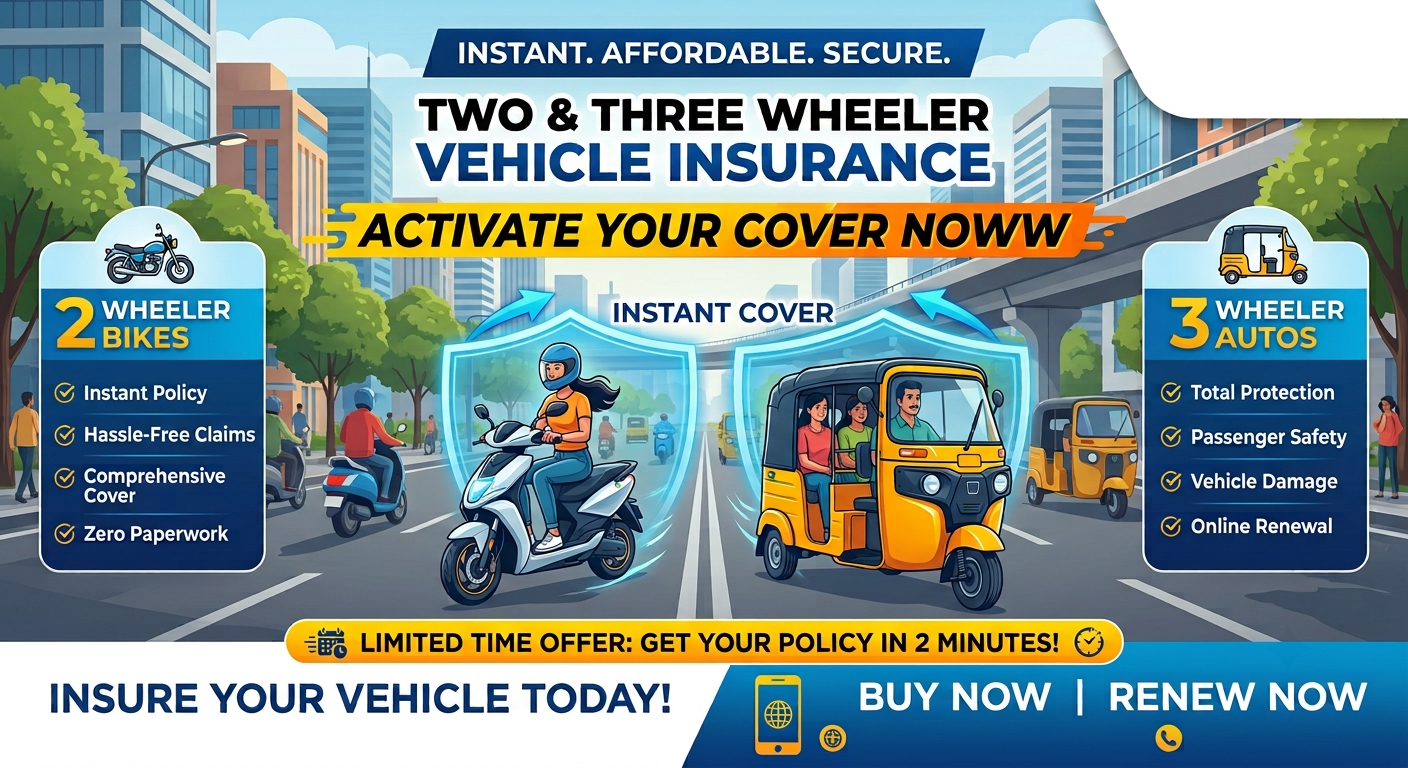
The Ultimate Guide to Two-Wheeler Insurance in 2026: Navigating Lapses, Multi-Year Rules, and Digital Renewal Strategies
Riding a bike offers an unmatched sense of freedom, but it also carries real-world responsibilities. As we cruise through 2026, the two-wheeler ecosystem has evolved dramatically. With the explosion of electric two-wheelers (E2Ws), the rise of high-performance mid-segment motorcycles, and an entirely digitized ecosystem, managing your vehicle’s safety net is different than it was just a few years ago.
If your bike insurance renewal date is approaching, treating it as a routine chore could mean leaving serious money on the table or risking massive penalties. This extensive guide breaks down how to approach bike insurance renewal and choose the right two-wheeler insurance in 2026 to maximize your coverage while shrinking your premium.
Understanding the 2026 Two-Wheeler Insurance Landscape
The insurance market has transformed into a “digital-first” playground. Long queues and physical application forms are officially things of the past. Today, over 80% of riders purchase or renew their policies entirely online using instant e-KYC and digital verification.
Furthermore, data from across the industry highlights a significant shift in riding habits. Mid-segment bikes (125cc to 250cc) are now standard across both urban centers and rural areas. Because these bikes are frequently used for longer highway commutes, insurers are seeing an uptick in unique claim patterns—such as rear-end collisions and low-speed skidding. Because modern bikes utilize advanced components like dual-channel ABS and digital instrument clusters, even minor spills now result in costly repair bills. This makes structural, comprehensive protection more critical than ever.
Decoding Policy Types: What Are Your Options?
Choosing the correct policy type forms the foundation of your renewal strategy. You must balance legal compliance with financial prudence based on how and where you ride.
1. Third-Party Liability Coverage
This is the legally mandated minimum required by law. It protects you against financial liabilities arising from damage, injury, or death caused to a third-party person or property by your insured bike.
What it Excludes:
It provides absolutely zero financial coverage for damages sustained by your own motorcycle due to accidents, theft, or natural calamities.
2. Standalone Own-Damage (OD) Insurance
If you already possess a long-term third-party policy, you can pair it with a Standalone Own-Damage component. This covers repairs to your own bike from accidents, fire, vandalism, and environmental disasters.
3. Comprehensive Two-Wheeler Insurance
The gold standard of protection. It bundles third-party liability and own-damage coverage into a single policy, ensuring complete peace of mind regardless of who was at fault in an incident.
Pro-Tip for 2026:
With extreme weather events becoming more frequent, comprehensive coverage that includes natural disaster protection is highly recommended over basic third-party plans.
Comprehensive Comparison of Two-Wheeler Insurance Features
To help you visualize the core differences and make an informed decision during your next bike insurance renewal, look at the comprehensive breakdown below:
| Feature / Metric | Third-Party Only Plan | Standalone Own-Damage Plan | Comprehensive Policy (Recommended) |
|---|---|---|---|
| Legal Compliance | Fully Compliant | Not Compliant on its own | Fully Compliant |
| Third-Party Damage Coverage | Yes (Unlimited for injury) | No | Yes (Complete Protection) |
| Own Vehicle Damage/Accidents | No | Yes | Yes |
| Theft & Total Loss Protection | No | Yes | Yes |
| Natural & Man-made Disasters | No | Yes | Yes |
| No-Claim Bonus (NCB) Eligibility | No | Yes | Yes |
| Add-on Rider Availability | No | Yes | Yes (Zero Dep, Return to Invoice, etc.) |
| Premium Pricing Structure | Low (IRDAI Regulated) | Moderate (Based on IDV & cc) | Higher (Complete Risk Mitigation) |
Step-by-Step Guide to Digital Bike Insurance Renewal
Renewing your two-wheeler insurance in 2026 takes less than five minutes if you follow a structured approach. Here is how to navigate the online renewal journey smoothly.
Step 1: Gather Your Crucial Information
Before logging onto an insurance portal or aggregator app, keep your previous policy number, vehicle registration certificate (RC), and Aadhaar/PAN details handy for rapid authentication.
Step 2: Calculate Your Ideal Insured Declared Value (IDV)
The IDV is the current market value of your motorcycle. It represents the maximum amount the insurer will pay out if your bike is stolen or completely totaled beyond repair.
Warning: Do not deliberately lower your IDV just to save a few bucks on your premium. If your bike is stolen, a deflated IDV will result in a massive financial loss. Set it accurately according to standard market depreciation.
Step 3: Select the Perfect Add-On Covers
Add-ons allow you to customize your basic comprehensive policy into an elite shield. In 2026, specific add-ons have become indispensable for modern riders.
Zero Depreciation Cover
Standard policies factor in depreciation when paying out for plastic, fiber, and rubber parts during repairs. A Zero Depreciation (Zero-Dep) add-on ensures the insurer pays the full cost of replacement parts without deducting any depreciation value. This is highly recommended for bikes under 5 years old.
Engine Protection Cover
With urban waterlogging becoming a regular issue during heavy monsoons, hydrostatic lock can ruin your engine block. Standard insurance does not cover consequential damage to an engine caused by water ingestion. This rider keeps your engine fully covered.
Return to Invoice (RTI) Cover
If your bike is stolen or completely destroyed within its first few years, RTI ensures you receive the original on-road purchase price of the vehicle, including registration charges and road tax, rather than just the depreciated IDV.
Roadside Assistance (RSA)
Provides 24/7 emergency support for flat tires, battery jumpstarts, minor on-site repairs, and free towing up to a specified kilometer radius.
The Electric Two-Wheeler (E2W) Revolution
The two-wheeler insurance landscape in 2026 is heavily shaped by electric vehicles. EV insurance features its own set of rules, risk calculations, and pricing metrics that every modern rider must understand.
How EV Insurance Differs from ICE Bikes
Internal Combustion Engine (ICE) premiums are primarily calculated based on cubic capacity (cc). Electric two-wheelers, conversely, are priced based on kilowatt (kW) capacity. Because electric scooters and motorcycles rely heavily on advanced software, lithium-ion battery packs, and complex wiring harnesses, their repair profiles differ fundamentally from traditional bikes.
Battery Protection Add-on: A Non-Negotiable Asset
The battery pack accounts for up to 40% to 50% of an electric scooter’s total cost. Standard comprehensive insurance plans do not inherently cover gradual battery degradation, internal short-circuiting, or damage caused due to EV charging surges. Securing a dedicated Battery Protection rider is absolutely vital for safeguarding your electric two-wheeler investment against sudden breakdown losses.
The True Cost of a Lapsed Policy: Risks and Recovery
Life gets busy, and it is easy to forget an insurance expiration date. However, letting your bike insurance lapse is an expensive mistake with profound legal and financial ramifications.
The Legal Consequences
Riding a two-wheeler with an expired or lapsed policy is a severe offense. If caught by traffic authorities, you can face steep fines, vehicle impoundment, or even imprisonment for repeat offenses. More importantly, if you cause an accident while uninsured, you bear total personal financial liability for all third-party damages, which can run into lakhs of rupees.
The Financial Penalty: Losing Your No-Claim Bonus (NCB)
The No-Claim Bonus is a reward given by insurance companies to riders who do not file any claims during a policy year. This bonus accumulates over time, offering up to a 50% discount on your own-damage premium by the fifth consecutive claim-free year.
Crucial Deadline: If you do not renew your lapsed bike insurance policy within 90 days of its expiration date, your accumulated No-Claim Bonus resets completely to 0%. Years of safe riding rewards vanish instantly.
How to Renew a Lapsed Policy in 2026
If your policy has already expired, you can still remedy the situation online. Most top-tier insurance companies now offer a “Self-Inspection” feature through their mobile apps. Instead of waiting days for a physical surveyor to visit your house, you can take a real-time video and photos of your bike through the insurer’s app. If no major pre-existing damages are found, your policy is issued within hours.
Insider Tactics to Lower Your 2026 Two-Wheeler Insurance Premium
You don’t have to break the bank to get excellent coverage. Use these industry insider strategies to lower your premiums safely without sacrificing essential protections:
- Opt for Multi-Year Policies: Buying a 2-year or 3-year policy protects you against annual hikes in third-party premium rates regulated by the IRDAI. It also saves you the hassle of yearly renewals.
- Install ARAI-Approved Anti-Theft Devices: If your bike is fitted with a security system certified by the Automotive Research Association of India (ARAI), insurers offer an additional discount on your own-damage premium.
- Transfer Your Accumulated NCB: Remember that the No-Claim Bonus belongs to the rider, not the bike. If you sell your old motorcycle and buy a new one, make sure to get an NCB certificate from your insurer so you can transfer your discount to your new vehicle.
- Choose Voluntary Deductibles Wisely: A voluntary deductible is the initial amount you agree to pay out of your own pocket during a claim before the insurer covers the rest. Opting for a higher voluntary deductible drops your premium cost, but ensure it is an amount you can realistically afford if an accident occurs.
Conclusion: Ride Safely into the Future
Your two-wheeler is more than just a tool for commuting—it represents your daily freedom and convenience. Protecting it with the right two-wheeler insurance policy ensures that unexpected road mishaps do not disrupt your financial stability.
As technology and traffic conditions evolve, take control of your bike insurance renewal today. Evaluate your coverage requirements, pick the necessary add-ons, leverage your No-Claim Bonus discounts, and ride with complete confidence throughout the year ahead.
Leave a Reply